
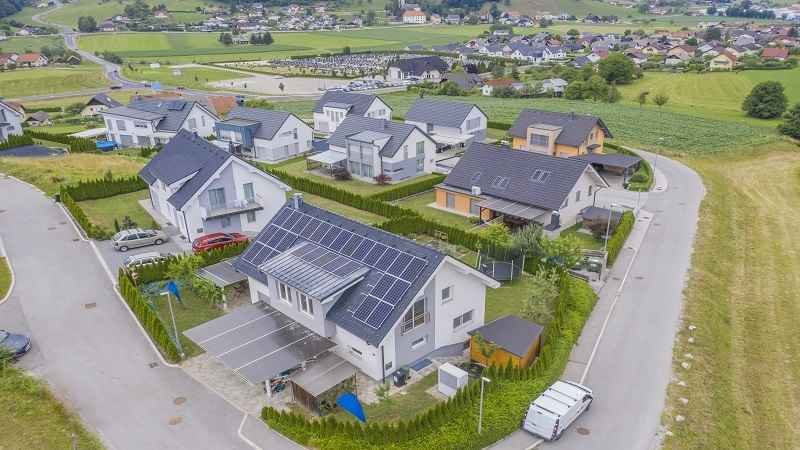
Over the last few years, solar panels have become a much more common feature on homes across the UK. With rising energy prices and more homeowners investing in renewable energy, buyers are increasingly coming across properties that already have solar panels installed. In fact, by the end of 2024, there were nearly 1.5 million UK homes with solar panel systems, making this a very normal part of the property market today.
At first glance, buying a house with solar panels sounds like a clear advantage. Lower electricity bills, a smaller carbon footprint, and a property that already has energy-efficient upgrades in place. But before making an offer, there are a few important checks every buyer should make. Solar panels can add value to a property, but only when the system is properly installed, legally documented, and functioning as expected.
Here is what UK homebuyers should know before signing the paperwork.
First, Find Out Who Actually Owns the Solar Panels
One of the most important things to check is whether the solar panels are owned outright by the seller or whether they are part of an older leasing agreement.
A few years ago, some UK homeowners installed solar panels through “rent-a-roof” schemes. In these arrangements, another company technically owns the system and leases the roof space for a long period, sometimes 20 to 25 years.
This matters because leased systems can create complications during the buying process. Some mortgage lenders are cautious about these agreements, and in certain situations, it can delay conveyancing.
Ask the seller directly:
- Were the panels purchased outright?
- Is there an active lease agreement?
- Are there any third-party contracts attached to the system?
If the seller cannot clearly answer these questions, your solicitor should investigate further before proceeding.
Ask for Solar Panel Documentation
Just like you would check boiler certificates or electrical safety documents, solar panel paperwork is equally important.
A properly installed solar system should usually come with:
- Installation certificate
- Warranty documents
- Manufacturer information
- Maintenance records
- Electrical compliance paperwork
One particularly important document in the UK is the MCS Certificate. Microgeneration Certification Scheme certification proves the system was installed by an approved installer and often affects eligibility for energy payment schemes.
Without proper documentation, future maintenance or transferring ownership can become unnecessarily difficult.
Check the Age of the System
Solar panels do not last forever, even though they generally perform well for many years.
Most modern systems have a lifespan of around 25 to 30 years, but efficiency naturally declines over time.
A home with panels installed ten years ago may still be valuable, but buyers should understand:
- When the system was installed
- How efficiently it is still performing
- Whether any components need replacement soon
One component worth paying attention to is the inverter.
The inverter converts solar energy into usable electricity, and many need replacing after roughly 10 to 15 years. Replacing one can become an unexpected expense after moving in.
Ask for service history whenever possible.
Understand Whether the Property Receives Energy Payments
Some older UK solar systems operate under the government’s old Feed-in Tariff (FiT) scheme, while newer systems usually work through the Smart Export Guarantee (SEG).
Ofgem introduced these frameworks so homeowners can receive payments for excess electricity sent back to the grid.
This can be financially valuable, but buyers should confirm:
- Is the property currently registered for payments?
- Can ownership transfer to the new buyer?
- Which provider manages the account?
If this step gets missed during the purchase process, transferring benefits later can become frustrating.
Inspect the Roof Condition Carefully
Solar panels themselves are not always the biggest concern.
The roof underneath matters just as much.
If the panels were installed years ago and the roof needs repair later, removing and reinstalling the panels adds extra cost.
Before buying, it is worth checking:
- General roof condition
- Signs of leaks or structural wear
- Whether roof repairs may be needed soon
A standard property survey may not always assess solar installation quality in detail, so specialist inspections can sometimes be worthwhile.
A cheap home purchase can quickly become expensive if roofing work is needed immediately after completion.
Ask How Much Energy the System Actually Produces
Not all solar panel systems perform equally.
Two homes may have similar-looking installations while generating very different amounts of electricity.
Ask the seller for recent energy production data.
Things affecting performance include:
- Roof direction and angle
- Nearby trees creating shade
- Panel cleanliness
- Local weather conditions
- System size measured in kilowatt peak (kWp)
A larger system usually provides greater savings, but actual performance data tells the real story.
Do not assume visible solar panels automatically mean major energy savings.
Check Whether the System Includes Battery Storage
More modern installations sometimes include solar battery storage.
Battery systems allow homeowners to store unused electricity for later rather than immediately exporting it to the grid.
This can significantly improve savings.
If batteries are included, ask:
- Which battery brand is installed?
- How old is the battery?
- Is warranty coverage still active?
- What storage capacity does it have?
Battery replacement costs can be high, so this is worth understanding before purchase.
Speak With Local Property Experts Before Making a Decision
Solar panels can absolutely make a property more attractive, but buyers should treat them like any other major home feature.
A well-maintained system can lower energy bills and improve long-term property appeal.
A poorly documented or leased system can create unnecessary complications.
This is where working with experienced local property professionals becomes valuable.
If you are buying property in Herefordshire or surrounding areas, speaking with a local estate & letting agent in Hereford & Ross on Wye can help you understand property-specific considerations, local market conditions, and important details buyers often overlook during the purchasing process.
Final Thoughts
Buying a house with solar panels in the UK is usually a positive move, but it should never be treated as a simple bonus feature.
Take time to understand ownership, paperwork, warranties, system performance, and any ongoing agreements attached to the installation.
The right property can offer lower running costs and better long-term value.
The wrong one can create legal and financial headaches that most buyers never expected.
A little extra checking before exchange can save a lot of trouble after moving in. See more.